






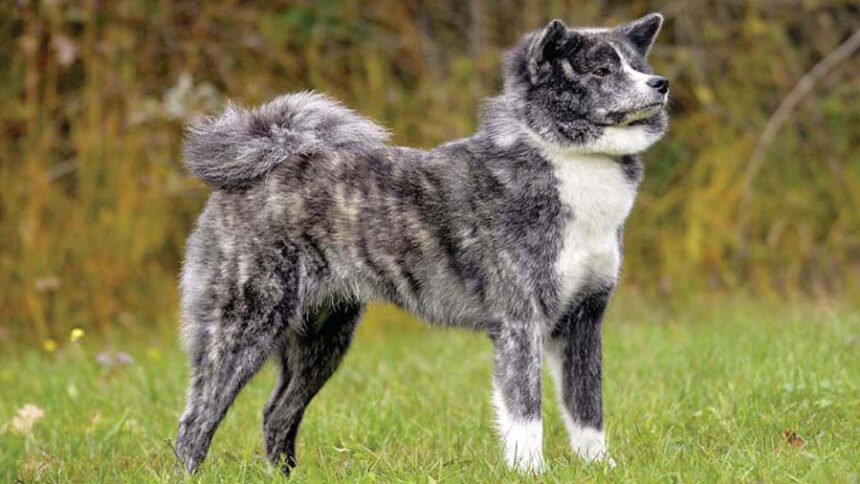
Picture a dog so dignified it seems to carry centuries of history in a single glance. That is the Akita, Japan’s proud spitz breed, standing tall with a stare few owners ever fully decode. Bred for harsh mountain winters and shaped by a warrior culture, this dog inherited far more than fur and muscle. Samurai once chose Akitas as companions, and something of that ancient code still lingers in the breed’s temperament today. Stubborn, selective and fiercely independent, the Akita refuses to be commanded like an ordinary pet. Instead, it must be understood, respected and slowly won over. Nowhere is that loyalty more famous than in the true stories of Hachiko and, more recently, a wartime dog named Reeny. Both animals waited for owners who would never return, turning private grief into worldwide symbols of devotion. Choosing an Akita means choosing a relationship, not a possession, and that distinction changes everything about how this remarkable breed should be raised.
A Breed Growing in Popularity
Choosing a dog breed always comes down to personal taste, yet anyone drawn to the Akita’s size and character rarely looks elsewhere. Interest in Japanese breeds has surged recently, with rarer dogs like Hokkaido, Kai, Kishu and Shikoku slowly gaining fans. Still, Shiba Inu and Akita remain the most established choices among Western dog lovers. Rising demand, however, brings a serious downside. Not every breeder can meet that demand while preserving sound temperament and health. A small Shiba with behavioral issues is manageable; an Akita weighing 40 to 45 kilograms as an adult is a different challenge entirely. Consequently, prospective owners should seek breeders who prioritize health, structure and temperament equally. Responsible breeders also continue importing quality bloodlines directly from Japan, keeping the gene pool strong and diverse.
Born to Hunt Bears
Long before becoming a companion animal, the Akita worked as a hunting dog in Japan’s frigid northern regions, tracking bears through deep snow. Hunting pairs, typically one male and one female, cornered the animal together as a team. Once the bear rose onto its hind legs, hunters could finally take a clean shot. Working Akitas were traditionally leaner and more agile than today’s show-ring dogs, built for stamina rather than spectacle. On Hokkaido’s especially harsh terrain, the breed also hunted smaller game and occasionally pulled sleds across the snow. That versatility explains why the Akita earned such deep respect among rural communities centuries ago.
Nearly Lost, Then Rebuilt From Scratch
Today’s massive, imposing Akita looks nothing like its distant ancestors. Historically, Japanese breeds stayed small or medium in size, including the original Akita Matagi hunting line. Starting in 1868, breeders crossed these dogs with Mastiffs and Tosas, chasing greater size and aggression for organized dog fighting. That decision erased many classic spitz traits almost overnight. When authorities banned dog fighting in 1908, enthusiasts fought hard to restore the breed’s original form. Their efforts paid off in 1931, when Japan officially declared the Akita a National Monument.
Related News


World War II then threatened to erase the breed entirely. A wartime order demanded that most dogs be seized for meat and fur, sparing only German Shepherds used for military duty. Some owners tried outsmarting the rule by crossbreeding Akitas with German Shepherds, producing dogs with larger ears and darker facial markings. That new type eventually evolved into what breeders now call the American Akita. After the war ended, three distinct Akita types remained: hunting dogs, herding-influenced dogs and fighting-line dogs, all reduced dramatically in number. Dedicated breeders spent years removing outside bloodlines, slowly restoring the breed’s original purity and strength.
Hard to Win Over, Impossible to Forget
Proud, austere and famously difficult to read, the Akita carries dignity in every movement. This is a dog shaped by an entirely different culture, so understanding that background matters before bringing one home. Winning an Akita’s trust requires patience built on mutual respect rather than dominance or force. Pressuring the dog usually backfires, creating tension instead of connection. Interestingly, Akitas also enjoy outsmarting owners when they simply refuse to cooperate, darting away with a mischievous grin. Only a calm, confident approach eventually earns their attention again. Around other dogs, Akitas tend to pick favorites and can turn combative toward animals they dislike. Early, carefully guided socialization therefore becomes essential, built on positive experiences rather than chaotic encounters. Most Akitas also dislike being handled by strangers, making early protection from clumsy approaches equally important. Earning genuine affection from this breed is rare and deeply rewarding, though never effortless.
Japanese Akita or American Akita?
Confusion between the two Akita types remains extremely common, yet real differences separate them clearly. The so-called Dewa line, shaped by crossbreeding with Mastiffs and German Shepherds, became the foundation for the American Akita. Soldiers returning from postwar Japan brought many Dewa-line dogs into the United States, where the breed found new purpose. American Akitas now serve in police units, guide dogs for the blind, and disaster search-and-rescue teams. Kennel clubs eventually split the two lines apart entirely, with the American Kennel Club now treating them as separate breeds. In 2001, the breed briefly carried the name Great Japanese Dog before officially becoming the American Akita in 2006. Naming conventions still vary by country: Britain calls the American type simply “Akita,” while the Japanese type becomes “Japanese Akita” instead.



Physically, the two lines diverge sharply. American Akitas carry heavier bones, longer bodies and a more mastiff-like head with a shorter, squarer muzzle. Their coat length stays uniform across the body, unlike the Japanese Akita’s varied fur length. Ear size, eye shape and overall temperament differ too, with American Akitas moving slower and Japanese Akitas staying notably more agile.
Loyalty That Outlasts a Lifetime
Two Akitas, born decades and continents apart, became global symbols of devotion that outlived their owners. Hachiko, born in 1923, bonded deeply with Professor Hidesaburō Ueno soon after adoption. When the professor died suddenly in 1925, Hachiko refused to accept the loss. Every single day for ten straight years, the loyal dog returned to the train station where his owner once boarded for work. Word of Hachiko’s devotion spread across Japan, eventually inspiring bronze statues, books and a 2009 film starring Richard Gere.
Nearly a century later, an Akita named Reeny wrote a strikingly similar chapter during the war in Ukraine. Her owner, Tetyana Zadorozhnyak, was killed by Russian-allied forces occupying the region in April. Reeny refused to leave the family home afterward, resisting anyone who tried removing her from the property. Because the surrounding area had been mined, staying there posed a serious danger to the grieving dog. Relatives eventually located Reeny and coaxed her toward a new life with patience and care. A woman named Nadezhda, who already owned an Akita herself, slowly earned Reeny’s trust and welcomed her home. International media soon nicknamed her “the Hachiko of Makariv,” turning private tragedy into a small, moving symbol of resilience.



Guarding Against Fleas and Ticks
Beyond temperament and history, prospective owners must also prepare for practical health challenges common to the breed. Fleas are fast-breeding insects, while ticks belong to the arachnid family alongside spiders. Both parasites feed on blood and can transmit serious disease to dogs and humans alike. Ticks lurk in vegetation, latching onto passing animals before swelling dramatically after feeding. Fleas, meanwhile, infest not just fur but furniture and carpets throughout a household, causing intense itching and allergic reactions in sensitive dogs. Owners should watch for persistent scratching, unusual irritability, or localized hair loss along the lower back and tail base, which often signals flea allergy dermatitis. Left untreated, constant scratching can trigger secondary bacterial infections requiring veterinary care. Ticks pose an even greater danger, since their bites can transmit Lyme disease, a condition that also affects humans, along with piroplasmosis, encephalitis and several other serious illnesses. Veterinarians strongly recommend year-round parasite prevention, since warmer winters now keep fleas and ticks active longer than in previous decades. Anyone spotting a tick should remove it carefully using proper tweezers rather than bare fingers, and consult a veterinarian promptly if unusual symptoms follow a bite.