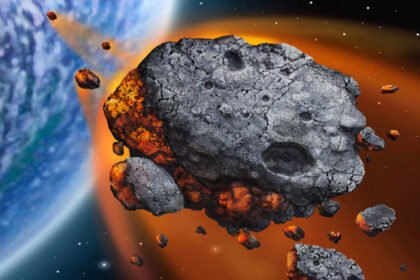






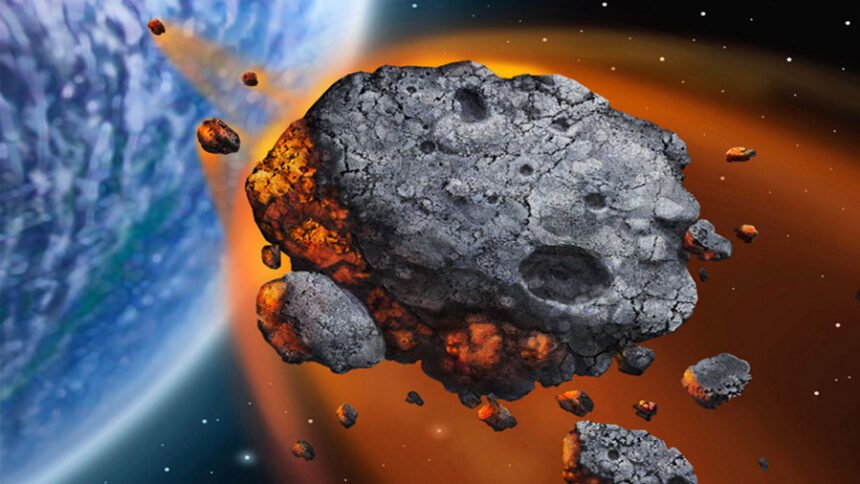
A blinding flash suddenly rips through the night sky, followed by a deafening sonic boom that shakes the ground! For planetary scientists, this dramatic atmospheric entry marks the beginning of an ancient puzzle explaining the birth of our solar system. However, for a secretive global network of professional treasure hunters, this thunderous roar signals the start of a massive gold rush. Did you know that a rare extraterrestrial fragment can easily command market values ten times higher than pure gold?
From scorching desert dunes to frozen Antarctic ice fields, private prospectors race against time to recover these spatial fragments before weather damages them. But what happens when an extraterrestrial rock crashes through a residential roof or destroys a parked family car? Who actually holds legal ownership over this fallen cosmic treasure?
Behind this lucrative enterprise lie fierce international legal disputes, incredible scientific discoveries from Mars, and ordinary homeowners who gained instant fortunes overnight. Step into this curious world where ancient rocks falling from space alter human lives forever!
Across global impact sites today, planetary geologists and commercial collectors hunt meteorite fragments, proving that extraterrestrial rocks yield vital solar system data while commanding astronomical prices in private markets. Scientific institutions trace these space rocks back to ancient asteroids, lunar impacts, and Martian cratering events that hurled crustal material across space millions of years ago. Meanwhile, private collectors pay between $11,000 and $22,500 per ounce for rare specimens, fueling intense international search efforts following major atmospheric breakup events. Consequently, legal authorities and property owners currently debate complex mineral ownership rights to regulate extraterrestrial hunting while preserving priceless planetary research materials for public science.
Related News


Why Does a Dark Space Stone Outvalue Pure Gold?
Fierce friction inside Earth’s atmosphere melts the outer surface, creating a distinctive dark fusion crust and shallow thumbprint-like indentations called regmaglypts. These unique physical features allow trained collectors to distinguish valuable space rocks from ordinary terrestrial stones instantly. Based on chemical composition, mineralogists classify these spatial specimens into three primary categories: metallic, stony, and rare stony-iron varieties.
Metallic types consist primarily of iron and nickel, accounting for approximately fifteen percent of all global recoveries. Stony meteorites make up the vast majority at eighty-two percent, containing silicate minerals and magnesium oxides. Meanwhile, stony-iron specimens represent a mere three percent of discoveries, standing as the most sought-after collector items due to their striking visual patterns.
The “Meteorite Man” and International Legal Disputes
Famous American prospector Robert Haag built an extraordinary private collection valued at over twenty-five million dollars. Widely known by his nickname “Meteorite Man,” Haag travels across continents whenever satellite networks report major atmospheric fireball events. Upon arrival at remote crash sites, he conducts quick workshops for local residents and offers immediate cash rewards for recovered specimens.



However, commercial harvesting methods frequently spark intense international friction with foreign governments seeking to protect national heritage. Australian authorities remain eager to prosecute Haag regarding the unauthorized export of a nineteen-gram lunar fragment. Modern nations increasingly enforce strict export prohibitions to prevent private entities from removing rare extraterrestrial specimens without official government clearance.
How Scientists Proved Space Rocks Came From Mars
Until recent decades, researchers assumed all meteorites originated exclusively from wandering asteroid belt fragments formed billions of years ago. That consensus shifted dramatically in 1982 when scientists compared Antarctic rock sample ALH 81005 against Apollo mission moon rocks. Matching chemical fingerprints proved that colossal cosmic impacts could actually hurl lunar crustal fragments directly toward Earth.
Fourteen years later, laboratory testing confirmed that Antarctic specimen EET 79001 contained trapped atmospheric gases matching Viking probe data from Mars. University of Oslo researchers subsequently traced nearly all Martian meteorites back to the massive Mojave impact crater. Finding rare Martian fragments like sample NWA 480 creates massive financial windfalls, yielding tens of thousands of dollars for lucky finders.



Complex Ownership Laws and Extraordinary Accidental Backyard Fortunes
Because dedicated extraterrestrial property laws remain rare worldwide, local authorities generally classify space rocks under standard mineral ownership statutes. In England, legal precedent grants ownership directly to the individual who physically discovers the fallen specimen. Conversely, Danish legislation claims all recovered space fragments as state property, while Australian laws restrict searching across rich desert zones.
Occasionally, falling spatial debris strikes residential properties directly, creating instant financial transformations for ordinary home owners. In 1992, an eighteen-pound space rock smashed through a parked Chevrolet Malibu in Peekskill, New York. The owner quickly sold the damaged vehicle and extraterrestrial stone for thousands of dollars, demonstrating how surprise cosmic impacts generate life-changing fortunes.
Scientific Legacy and Protecting Extraterrestrial Research Materials
Understanding the physical origin of planetary matter helps researchers decipher how terrestrial environments evolved across billions of years. Evaluating atmospheric dust accumulation reveals that Earth collects thousands of tons of microscopic cosmic material annually. Accessing verified geological data through the Smithsonian Institution ensures that researchers analyze authentic specimens under strict scientific protocols.
Related News



Preserving rare planetary samples for educational institutions protects human scientific progress while balancing private commercial interests globally. Exploring these fascinating cosmic discoveries reveals how space exploration connects directly to life on Earth. Discovering more groundbreaking science reporting and global news remains easy through our homepage collection. Ultimately, scientific dedication ensures that fallen space rocks continue shedding light on the mysterious origins of our universe.