




Violent Atlantic surges crash relentlessly against jagged coastal cliffs, sending misty plumes high into the tempestuous Portuguese sky. Standing on the precipice near Cascais, spellbound onlookers listen nervously as trapped oceanic air echoes through subterranean rock channels. Local folklore describes these guttural reverberations as haunting human groans, giving this coastal abyss its eerie, infernal reputation.
For generations, curious travelers have flocked to this treacherous ocean cavern to witness raw mechanical forces carving solid rock. Yet, behind its terrifying natural beauty lies a captivating historical tale involving eccentric occultists, deceptive notes, and intricate literary deceptions. During the autumn of 1930, international headlines erupted when a famous British occult author vanished without a trace beside these swirling waters.
Detectives frantically scoured the turbulent shoreline, interrogating prominent local writers while searching for clues along the spray-slicked cliffs. Today, the legendary geological formation attracts both adventure seekers and history enthusiasts eager to explore its misty paths. From summer breezes to terrifying winter swells, this coastal marvel offers an unforgettable encounter with geological power and historical intrigue.
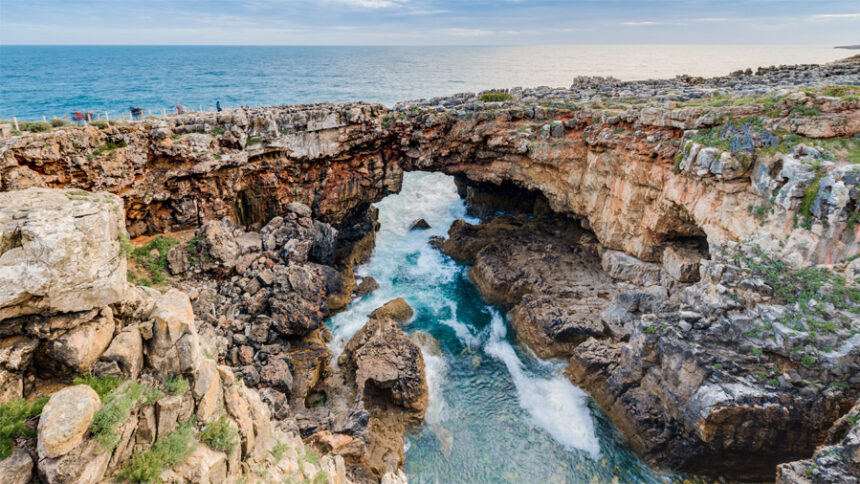
Along the rugged coastline of Cascais near Lisbon today, thousands of international tourists explore Boca do Inferno, a dramatic natural limestone arch where crashing Atlantic waves generate thunderous oceanic roars and misty water sprays. Geologists explain that centuries of relentless wave action carved a subterranean cavern that eventually collapsed, leaving an imposing stone archway open to raging sea surges. Historical records confirm that this treacherous location achieved global notoriety in September 1930, when British occultist Aleister Crowley staged his mysterious disappearance at the site alongside Portuguese poet Fernando Pessoa. Investigators initially feared a fatal tragedy after discovering a cigarette case and a cryptic farewell message on the rocks. However, Crowley reappeared safely in London days later, revealing a brilliantly orchestrated media hoax that continues to intrigue historians and literary scholars worldwide.

Geological Genesis of a Booming Atlantic Chasm
Over hundreds of years, powerful Atlantic tides systematically eroded the soft limestone shoreline of western Portugal, forming an intricate underground cavern system. Eventually, the heavy stone ceiling collapsed under continuous hydraulic pressure, leaving behind a magnificent natural rock bridge. Modern travelers standing above the ocean chasm observe how rising waves compress air inside the narrow limestone fissures.
Consequently, incoming ocean swells force seawater upward through rocky vents, creating dramatic plumes that resemble billowing smoke. During tranquil summer months, gentle tides splash softly against the arch, offering a serene backdrop for peaceful coastal walks. Conversely, winter ocean storms unleash terrifying swells that rattle the surrounding landscape, delivering a chilling display of nature’s unyielding force.
Navigating to this popular geological landmark proves exceptionally simple for visitors staying in the nearby town of Cascais. Travelers frequently stroll or ride bicycles along the paved oceanfront road, reaching the dramatic cliffs in roughly fifteen minutes. Additionally, well-maintained pedestrian pathways lead visitors down toward the base, providing distinct photographic angles of the roaring waters.


The Occult Hoax That Shocked the Literary World
Beyond its sheer natural grandeur, the coastal cavern maintains a permanent place in modern cultural history due to a sensational 1930 incident. Mysterious British esoteric writer Aleister Crowley orchestrated a fake suicide at the cliff edge, leaving behind a personalized cigarette case and a enigmatic farewell note. Police officers launched an immediate investigation, repeatedly questioning celebrated Portuguese poet Fernando Pessoa regarding his friend’s sudden disappearance.
Journalists across Europe published dramatic reports, speculating that the gloomy oceanic abyss had claimed another victim. However, Crowley secretly boarded a vessel and reappeared alive in London a few days later, shocking the international press. Scholars now recognize that Crowley and Pessoa collaborated to manufacture the elaborate publicity stunt, using the eerie reputation of the roaring cliffside to deceive global news outlets.
Furthermore, analyzing historical literary hoaxes provides valuable insight into early twentieth-century media dynamics and celebrity culture. Researchers studying coastal geomorphology emphasize that the location’s ominous acoustics provided the perfect theatrical backdrop for such an audacious illusion. Today, literary enthusiasts frequently visit the site to imagine the dramatic moment when Crowley staged his world-famous fake escape.



Planning an Unforgettable Trip to the Portuguese Coast
Visiting this famous geological attraction requires minimal preparation, making it an ideal day trip destination from Lisbon. Enthusiastic photographers recommend visiting during late afternoon hours, when golden sunlight illuminates the dramatic rock faces and ocean spray. However, travelers must exercise caution along wet pathways, especially when strong winds drive heavy sea mist across the stone staircases.
Nearby dining establishments serve fresh local seafood, allowing guests to relax while viewing the expansive Atlantic horizon. The nearby town of Cascais also offers historic architecture, vibrant art galleries, and scenic beaches for a comprehensive coastal itinerary. Whether drawn by geological wonder or historical intrigue, every traveler leaves with a deep appreciation for Portugal’s dynamic coastline.