




Dense ocean mist rolls quietly across the ancient French coastline as morning light reveals an impossible geological behemoth. Rising dramatically from emerald treetops, a blinding wall of shimmering crystal dominates the horizon like a frozen wave. Visitors standing at its base often gasp, overwhelmed by the sheer scale of this shifting natural structure.
For centuries, local fishermen watched powerful Atlantic storms reshape the shoreline, entirely unaware of the magnificent giant emerging nearby. Today, this towering sandy phenomenon captivates global explorers who travel miles to witness its mysterious, ever-changing silhouette. Standing atop this colossal mound offers an emotional encounter with raw natural forces that continuously reshape Western Europe.
Every passing breeze transports microscopic mineral particles, slowly pushing the entire ecosystem inland against human settlement. As golden hour approaches, the blinding white slopes transform into glowing ribbons of soft pink and deep amber. This living landscape tells a remarkable story of coastal evolution, persistent winds, and geological magic that demands immediate exploration.
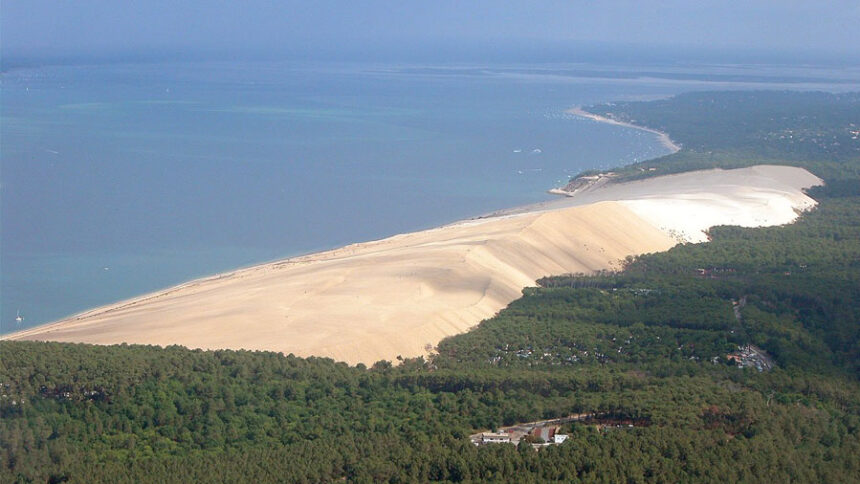
Near Arcachon Bay in southwestern France today, nature enthusiasts and geologists marvel at the Dune of Pilat, Europe’s highest sand dune, which constantly evolves through powerful Atlantic tides and coastal wind patterns. Situated seventy kilometers from Bordeaux, this remarkable quartz monolith directly connects vast maritime pine forests with open oceanic waters. Travel experts emphasize that accessing this natural wonder requires navigating specific regional transport networks, including dedicated railway lines, scenic highway routes, and extensive municipal bicycle paths. Visitors seeking unforgettable visual experiences ascend a specialized hundred-and-sixty-step staircase during evening hours to witness dramatic sunset color changes across the coastal landscape. Furthermore, local authorities encourage proper geographical awareness to help travelers avoid common navigational errors caused by nearby resort names.
The Astonishing Genesis of a Coastal Goliath
Positioned right at the entrance of Arcachon Bay, the majestic Dune of Pilat stands as Europe’s undisputed highest sand dune, captivating observers worldwide. Located seventy kilometers from the vibrant city of Bordeaux, this natural marvel bridges dense pine forests directly with the vast Atlantic Ocean. Reaching up to 108 meters above sea level, the colossal structure extends across 2.7 kilometers of coastline and spans 500 meters from forest to sea.
Centuries ago, catastrophic oceanic forces destroyed an enormous offshore sandbank, washing billions of mineral fragments inland repeatedly. Geologists believe this massive seventeenth-century event provided the foundational material for the colossal structure we observe today. Back in 1855, early topographers recorded the elevation at a modest thirty-five meters before rapid growth occurred. Driven by persistent ocean gusts, the dune has expanded massively to its present-day height.
This relentless environmental shift continues to alter the local landscape year after year. As prevailing coastal winds blow continuously from the sea, the immense sand structure steadily encroaches upon the neighboring woodland. Ancient trees occasionally disappear beneath the advancing sandy slope, demonstrating the dynamic power of unyielding natural forces in active coastal zones.

Cracking the Geological Code Behind Shifting Quartz
Finely pulverized quartz constitutes nearly the entire volume of this mammoth coastal structure, creating extraordinary optical displays. Sunbeams hitting these microscopic mineral facets paint the surrounding landscape in striking shades of brilliant white and gentle rose. The deep green pine forest backdrop further intensifies these vibrant color transformations during different times of the day.
Geological researchers frequently study the unique mineral composition to understand how maritime currents deposit such massive quantities of quartz along this specific stretch of French coastline. The interaction between salty ocean breezes, shifting tides, and microscopic sand grains creates a self-sustaining ecosystem that continuously renews its outer surface.
Navigating geographical guides requires caution, because many resources incorrectly label the site as “Dune du Pyla” instead. That frequent misspelling actually stems from the nearby seaside resort named Pyla sur Mer situated just northward. Recognizing this distinction helps travelers select correct navigation destinations and avoid unnecessary transit delays while exploring the region.


Master Plan for Reaching the Shifting Summit
Reaching this remote destination proves exceptionally straightforward for international travelers utilizing France’s modern transportation infrastructure. High-speed TGV trains connect directly to Arcachon station, where dedicated regional buses transport eager visitors straight to the site. Passengers arriving at Bordeaux airport can easily take a shuttle to St. Jean station before catching the train.
Alternatively, motorists can navigate the N250 highway toward La Teste de Buch before following regional road D259 directly to the parking facilities. Adventurous cyclists frequently utilize extensive paved bike paths winding peacefully through fragrant maritime pine forests toward the coast. These well-maintained routes allow eco-conscious tourists to enjoy stunning natural scenery long before setting foot on the sand.
Proper preparation ensures a smooth journey regardless of your chosen mode of transportation. Packing essential items like sun protection, abundant drinking water, and suitable footwear enhances safety during hot afternoon hours. Exploring the vast sandy terrain requires moderate physical effort, making comfortable gear an absolute necessity for visitors of all ages.
Reaching the Crest for Unforgettable Oceanic Vistas
Ascending to the summit requires conquering a sturdy staircase featuring precisely one hundred and sixty wooden steps built directly into the sandy slope. Upon reaching the crest, breathtaking panoramas unfold dramatically, leaving tired climbers utterly speechless against sweeping ocean gusts. To the west lies the vast horizon of the Atlantic Ocean, while thousands of hectares of emerald pine forest stretch out to the east.
During low tide, the view expands even further to reveal a complex network of navigable channels and glistening sandbars inside Arcachon Bay. These intricate waterways change shape constantly under the influence of strong ocean currents, creating a dynamic mosaic of blue, green, and gold. Observing this hydraulic dance from over a hundred meters above sea level offers a rare perspective on coastal geography.
Arriving right before twilight rewards patient observers with legendary sunset views that illuminate the sky in fiery hues. The stark visual clash between deep green woodland and turquoise saltwater creates unforgettable memories for every traveler. As twilight deepens, the shifting winds whisper through the quartz slopes, leaving an indelible mark on all who witness this French treasure.