
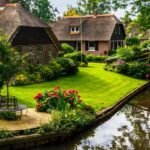



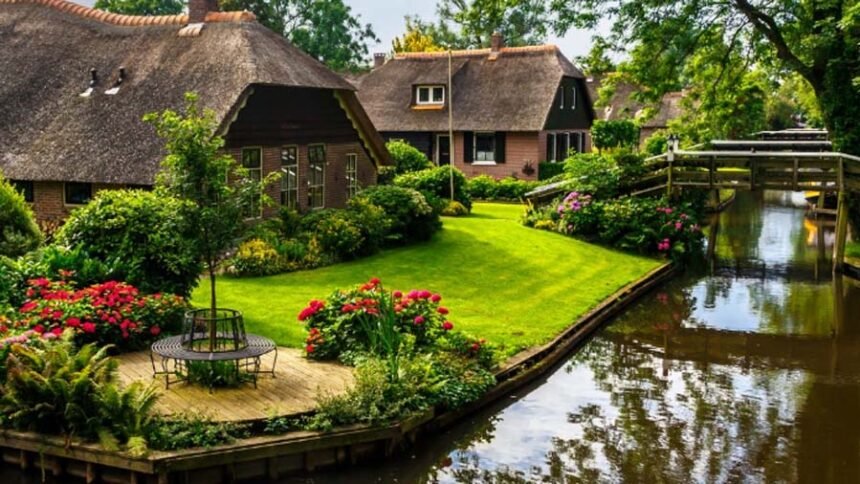
Peaceful water ripples gently reflect centuries of preserved architectural history across the enchanting province of Overijssel in the Netherlands today. Known globally as the Green Venice, Giethoorn village offers a extraordinary sanctuary completely untouched by modern traffic noise or exhaust fumes. Over eight hundred years ago, fleeing religious dissidents established this isolated settlement deep within marshy wetlands to escape severe persecutions. Consequently, early inhabitants engineered an intricate aquatic transport system that relies exclusively on narrow canals, wooden footbridges, and quiet electric boats. Approximately two thousand six hundred residents currently maintain this tranquil lifestyle alongside vibrant summer visitors seeking authentic European cultural heritage. Furthermore, surrounding nature reserves protect diverse wetland ecosystems while local museums preserve centuries of regional craftsmanship. Navigating these pristine waterways provides an extraordinary glimpse into historical adaptation, sustainable living, and timeless rural serenity.
Religious Origins and Roadless Architecture
Thirteenth-century Flagellant refugees originally carved out this isolated settlement while fleeing intense spiritual persecution across Central Europe. Strategic swampy terrain offered natural protection against hostile forces pursuing the vulnerable religious community.
Intriguingly, early settlers discovered vast peat deposits beneath the damp soil during initial structural construction projects. Manual peat digging gradually created massive artificial trenches that filled with fresh groundwater over time.
Eventually, these expanding watery trenches evolved into the famous interconnected canal network that defines local geography today. Builders raised over one hundred seventy-six wooden bridges to connect isolated island homesteads safely.
Navigating the Silent Canals
Automobiles remain strictly prohibited throughout the historical core of this unique Dutch settlement. Residents and international travelers move exclusively on foot, via bicycles, or using silent electric motorboats.
Customary flat-bottomed vessels resemble traditional Venetian gondolas, gliding smoothly under low wooden archways throughout the summer season. Visiting drivers must park their vehicles outside the village boundaries before entering the quiet historic center.
Furthermore, annual summer cultural events draw passionate crowds to the scenic waterways during late August afternoons. During the celebrated Gondelvaart Festival, local artisans parade magnificently decorated boats through crowded canals, competing for prestigious artistic honors.
Historical Preservation and Local Heritage
Preserving historical identity remains a paramount objective for the local population and regional heritage authorities. Transformed historical farmhouses display original thatched roofs that showcase exceptional nineteenth-century carpentry techniques.
Culture enthusiasts frequently explore the revered ’t Olde Maat Uus museum to examine historic photographs, legal documents, and preserved domestic artifacts. Authentic exhibits illustrate how previous generations harvested peat, managed water levels, and built durable wooden vessels.
Additionally, specialized cultural venues enrich the local tourist itinerary throughout the entire calendar year. The renowned De Oude Aarde geological facility displays rare mineral crystals and precious gemstone specimens collected globally.
Transportation Collections and Coastal Artifacts
Maritime history lovers often visit the popular Gloris Maris sanctuary to inspect extensive displays of rare deep-sea shells. Detailed educational exhibits explain historic trade routes and marine biodiversity across Atlantic coastal zones.
Meanwhile, vintage mechanical machinery fascinates visitors exploring the comprehensive Histomobil exhibition hall located nearby. Historic displays feature antique horse-drawn carriages, rare early bicycles, and restored classic motor vehicles from previous centuries.
GIETHOORN VISITOR DISTANCE GUIDE┌────────────────────────────────────────────────────────────────────────┐│ Groningen Airport Transit │ Approximately 60 Kilometers North-East ││ Amsterdam Capital Route │ Approximately 120 Kilometers South-West ││ Steenwijk Railway Hub │ Express Bus Link takes 17 Minutes Direct │└────────────────────────────────────────────────────────────────────────┘Exploring neighboring historic settlements also offers rewarding day trips for adventurous travelers. Nearby coastal communities like Vollenhove, vibrant commercial hubs like Meppel, and fortified Steenwijk display rich regional history.
Temperate Climate and Seasonal Weather Dynamics
Moderate maritime atmospheric conditions govern regional weather patterns throughout the changing seasons in Northern Europe. Mild summer months maintain comfortable temperature ranges between eleven and twenty-one degrees Celsius without extreme heat waves.
Conversely, chilly winter atmospheric currents rarely bring severe prolonged freezing spells to the inland canal waters. Atmospheric precipitation reaches peak levels during late autumn months, particularly throughout November and December.
Consequently, summer presents ideal conditions for outdoor bicycle excursions, canal cruising, and open-air museum exploration. Balanced humidity levels preserve surrounding lush green lawns and vibrant botanical displays across every island home.
Practical Access and Modern Travel Routes
Reaching this aquatic haven from major transportation hubs requires straightforward travel planning along modern Dutch transit networks. Travelers departing international air hubs in Amsterdam cover approximately one hundred twenty kilometers via primary highways.
Alternatively, budget flyers arriving at Groningen airport travel roughly sixty kilometers through scenic northern countryside landscapes. Travelers frequently explore Groningen’s vibrant historic quarters before continuing their journey toward the roadless village.
Finally, public transportation offers convenient access via regular train services stopping at nearby Steenwijk station. Connecting local transit buses transport passengers directly to the canal entrances within seventeen short minutes.