





Long before ancient humans created written alphabets, painted subterranean cave walls, or built permanent stone settlements, their survival depended entirely upon a hidden mental superpower. Deep inside dark Pleistocene wildernesses, early hominids confronted terrifying predators, severe weather changes, and unpredictable food shortages daily. Physical strength alone could never guarantee their continued existence against such formidable environmental hazards. Instead, our prehistoric ancestors possessed an astonishing ability to construct invisible scenarios, predict future outcomes, and invent novel tools purely within their minds.
This unseen cognitive engine, known as human imagination, bridges the delicate gap between raw emotional instincts and structured rational thought. By mentally testing alternative actions without risking immediate physical harm, early humans transformed raw natural elements into life-saving survival tools. Modern neuroscientists and evolutionary biologists now realize that imaginary scenarios drive every major human breakthrough, from complex quantum physics formulas to extraordinary artistic masterpieces. Step inside the fascinating biological history of creative thought, where invisible mental images continuously shape the tangible reality of human progress.
Over two million years ago across wild African landscapes, early human ancestors initiated an evolutionary revolution by using mental simulation to manufacture chipped stone tools for survival. Consequently, cognitive scientists from the Cognitive Science Society emphasize that imaginative capacity functions as a primary driver of human technological innovation, artistic creation, and scientific discovery. Evolutionary researchers demonstrate how primitive mental trials enabled early hominids to manipulate raw flint, harness natural fire, and coordinate complex social hunting strategies long before formal languages existed. During nocturnal sleep cycles, the brain reshapes stored experiences into chaotic unconscious imagery, which waking prefrontal cortex activity eventually organizes into creative insights. Today, clinical psychologists utilize targeted mental visualization to help patients overcome severe phobias, demonstrate neurological healing, and master complex motor skills safely.
The Evolutionary Survival Engine and Tool Creation
Early human ancestors survived harsh prehistoric environments primarily because primitive imaginative thinking allowed them to improvise innovative hunting and foraging strategies. Looking at a plain rock, an ancient hominid could visualize striking its edges to produce a sharp cutting blade. This mental image directly yielded the earliest butchering tools, allowing early humans to harvest meat efficiently from animal carcasses. Over hundreds of thousands of years, these crude chipped stones evolved into sophisticated Acheulean hand axes through refined mental planning.


Furthermore, imaginative capability emerged gradually across millions of years of hominid evolution without requiring formal spoken language. Early humans mentally simulated behavioral choices, evaluating social alliances or tribal power shifts before taking actual physical risks. Controlling fire similarly required bold imaginative steps, transforming a burning tree branch into a vital source of warmth, protection, and cooked food. Intelligent animals like chimpanzees also display basic mental simulation by utilizing stones to crack tough nuts, proving that visual imagination precedes speech.
Anthropologist Steven Mithen identified seven distinct evolutionary transitions that gradually unlocked human creative capacity. Key milestones include developing a theory of mind, experiencing extended juvenile periods for imaginative play, and evolving specialized cognitive modules. Eventually, complex grammatical language allowed individuals to express abstract concepts that single minds could never elaborate alone. Cognitive fluidity merged previously isolated knowledge domains, enabling early humans to invent rich metaphors, symbols, and artistic expressions. Later technological developments like writing and digital storage expanded human memory, while agricultural surpluses provided ample time for pure artistic creation.
Later, the emergence of complex language during the Pleistocene epoch dramatically magnified human imaginative power through storytelling, body art, and early music. Narratives eventually evolved into elaborate cultural sagas and moral epics, such as the ancient Mesopotamian Tale of Gilgamesh or India’s historic Mahabharata.



Neurobiology of Dreams and Practical Visualization Power
To understand how creative thoughts form, neuroscientists examine dream cycles, where conscious neurotransmitter activity decreases significantly during sleep states. Unconscious imagination reshapes daily memories into chaotic, unstructured mental imagery without logical real-world constraints. Upon waking, the brain’s prefrontal cortex resumes control, organizing these chaotic nighttime thoughts into structured, actionable ideas for daily life.
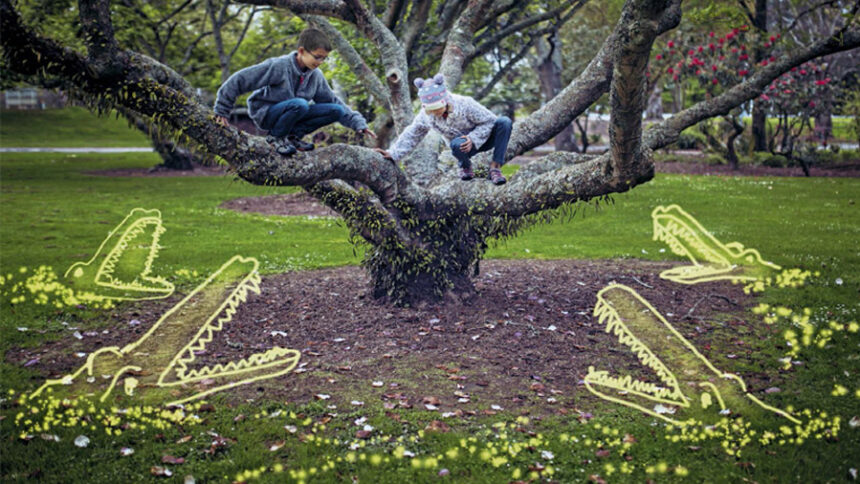
Additionally, modern brain imaging proves that vividly imagining a frightening scenario triggers physiological responses identical to facing real-world threats. When an individual visualizes a terrifying animal, the brain activates neural pathways matching an actual physical encounter. Clinical psychologists exploit this mechanism by guiding patients through quiet mental exposure, successfully neutralizing deep-seated fears and emotional phobias.
Therapists also leverage visualization techniques to accelerate physical recovery and enhance motor skills in athletic contexts. Mentally practicing intricate tasks, such as playing piano melodies, strengthens neural pathways in brain areas controlling fine motor functions. This mental rehearsal stimulates neuroplasticity without subjecting the physical body to physical exertion or fatigue.


In abstract domains like theoretical physics and higher mathematics, mental simulation allows researchers to formulate concepts beyond direct physical observation. Scientific progress relies heavily upon creative mental leaps, as philosopher Karl Popper argued when analyzing theoretical scientific discoveries. Albert Einstein famously conceived his groundbreaking theory of relativity by imagining himself riding alongside a beam of light through space. Similarly, surrealist artists like Salvador Dalí blended familiar elements with impossible scenarios to construct mesmerizing parallel realities. Exercising creative mental faculties on power of imagination channels enables individuals to unlock the full potential of human consciousness.