




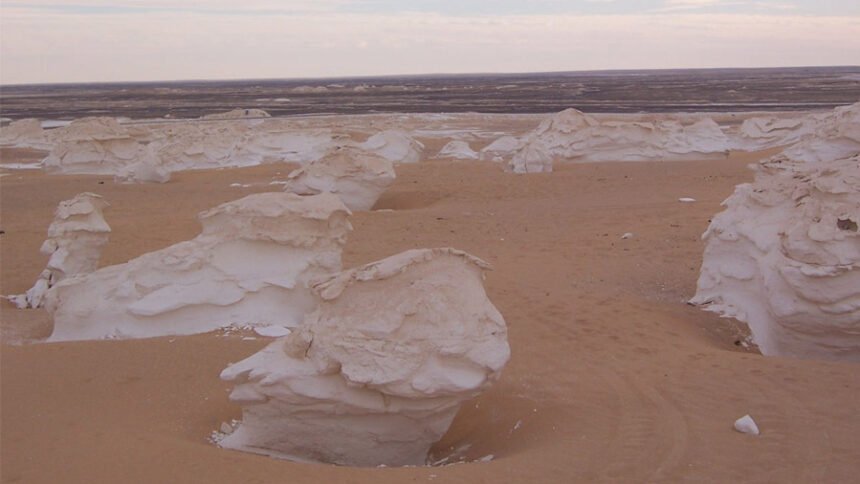
Blinding chalk pillars rise like ghostly monoliths across a vast alabaster landscape under the intense Egyptian sun. Stunned explorers standing in Sahara El Beyda marvel at otherworldly stone sculptures. These white rocks resemble melting glaciers or towering mushrooms. Centuries of relentless desert winds carved these chalk formations from ancient ocean deposits. Consequently, this process created a surreal realm that defies human imagination.
Long before scorching sunrays dried this magnificent basin, lush prehistoric savannahs covered the entire region. Wild lions, swift gazelles, and heavy rhinoceroses roamed freely alongside ancient human tribes. These animals gathered near sparkling freshwater lakes thousands of years ago. Today, marine fossils embedded within pure white sand remind travelers of a vanished aquatic world.
Furthermore, famous historical figures repeatedly braved these unforgiving dunes to seek divine prophecies. Ambitious conquerors and Egyptian queens visited thermal mineral springs across this enchanted wilderness. Modern adventurers continue to journey into this quiet sanctuary for unforgettable nights. They camp beneath a brilliant canopy of desert stars.
Across western Egypt today, conservationists and desert guides lead international expeditions through the White Desert. This protected national park covers over two thousand square kilometers between the Farafra and Bahariya oases. Geological researchers explain that intense wind erosion shaped these chalk rock formations over millennia. Prehistoric lakes dried up in this region roughly five thousand years ago. Historical records document that legendary figures traversed these alabaster sands during ancient times. Alexander the Great and Queen Cleopatra traveled here to reach the sacred oracle of Amon at Siwa. Today, adventurous travelers visit this remote wilderness through organized overnight desert safaris. Visitors witness striking limestone landscapes glowing under bright moonlight.

Unveiling the Ancient Ocean Hidden Beneath the Chalk
Five thousand years ago, fertile savannah grasslands flourished where blinding white chalk dust now covers the ground. Abundant natural springs fed deep lakes across the entire territory. These water bodies supported diverse wildlife communities, including lions, gazelles, and prehistoric rhinoceros herds. Ancient human civilizations established thriving settlements along these vanished riverbanks. Residents left subtle stone tools scattered across the dry terrain.
Eventually, dramatic climate shifts transformed the green paradise into a harsh desert environment over several centuries. However, the land preserved clear evidence of its aquatic history deep within the chalk layers. Today, sharp-eyed travelers frequently discover fossilized marine shells embedded directly inside wind-sculpted limestone boulders.
Geologists study these delicate chalk pillars to understand long-term climate patterns across North Africa. Continuous wind action gradually carved soft calcium carbonate deposits into whimsical shapes. These natural sculptures resemble animals, giant mushrooms, and abstract statues. Consequently, sunlight reflecting off these chalk formations creates dazzling visual color shifts throughout the day.



Legendary Empires and the Quest for Lost Oases
Throughout recorded history, the enigmatic white landscape served as a critical crossroads for ancient trade routes. Intrepid explorers spent centuries searching these shifting dunes for Zarzora. Legends described Zarzora as a mythical lost oasis holding vast treasures. Furthermore, military commanders navigated these treacherous desert paths to secure strategic footholds across North Africa.
In 331 BCE, Alexander the Great marched his army through these sands after conquering Egyptian lands. The ambitious king sought the sacred Oracle of Amon at Siwa. High priests allegedly predicted his global military supremacy inside the temple. Years later, Queen Cleopatra traveled along similar desert tracks to reach Siwa. She visited its sacred sanctuaries and lush palm groves.
Exploring the Historic Monuments and Thermal Springs of Siwa
Situated at the northern edge of the white wilderness, the historic Siwa Oasis rests inside a deep depression. Over three hundred subterranean springs irrigate dense groves of date palms and olive trees. Furthermore, ancient ruins like the Mountain of the Dead showcase elaborate pharaonic tombs. These historical structures date back to the Twenty-Sixth Dynasty.


Visitors to Siwa explore historic stone temples alongside Cleopatra’s Pool. Local legends hold that the Egyptian queen swam in these warm natural mineral springs. Today, local residents maintain traditional agricultural practices while welcoming respectful travelers. Guests experience unique cultural heritage surrounded by stunning desert views.
Navigating the Alabaster Wilderness in Modern Times
Reaching this spectacular natural wonderland requires a journey from Cairo into Bahariya or Farafra. Professional tour operators organize four-wheel-drive vehicles to navigate deep sand dunes safely. Additionally, licensed guides ensure visitors preserve delicate geological structures by following strict environmental rules.
Overnight camping trips remain the most popular way to experience the magical atmosphere of the region. As darkness falls, moonlight illuminates the brilliant chalk rock formations. These rocks cast eerie shadows across the silent landscape. Travelers sit around crackling campfires while enjoying traditional Bedouin hospitality. They gaze at countless stars filling the clear night sky.


International travel magazines frequently highlight these surreal desert camping excursions as bucket-list adventures. Comprehensive travel resources offer essential advice regarding desert safety, seasonal weather shifts, and respectful tourism practices. Curious readers exploring desert geography can discover detailed information through trusted scientific institutions.
Ultimately, this breathtaking Egyptian landscape bridges ancient history with raw natural beauty in an extraordinary way. Standing among silent chalk monoliths reminds human visitors of nature’s power. Shifting climate forces can transform entire worlds over geological time. Whether pursuing historical mysteries or seeking peaceful solitude, every traveler leaves the White Desert with profound lifelong memories.