




The mystery of how bees evolved remains a captivating puzzle for modern researchers. It is believed that tens of thousands of years ago, certain ancestral insects made a radical dietary shift. They abandoned a carnivorous lifestyle to embrace a plant-based existence centered entirely on floral nectar. This historic transition triggered a massive evolutionary change in their oral anatomy. Consequently, these insects developed specialized features designed for precision pollen collection. Today, analyzing the modern honeybee collective structure reveals much more than a simple insect species. Instead, these creatures function as a critical foundation for global biodiversity and environmental stability.
Their existence represents a marvel of biological design that remains unmatched by human technology. Every vibration and chemical signal they emit is part of a grand, ancient performance. Furthermore, documenting this cooperative framework helps us protect vital agricultural networks worldwide.
Architectural Genius in Wax
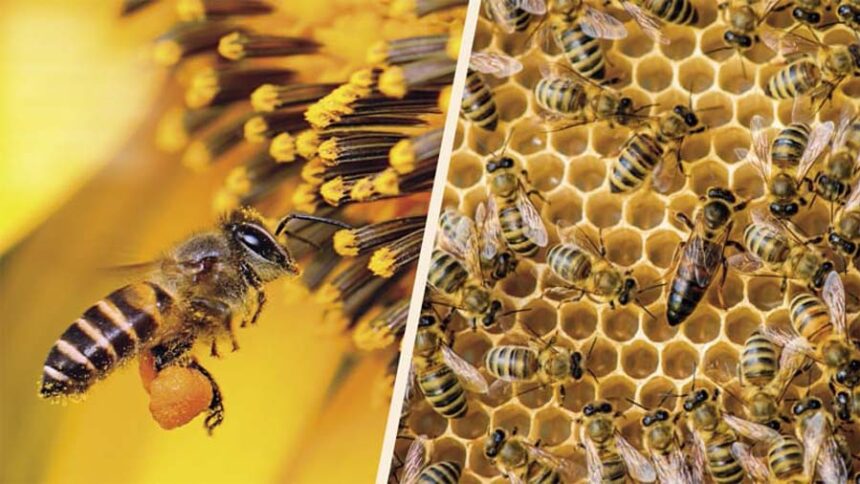
Within the hive, the concept of a home transcends all ordinary expectations. These structures are not merely storage units. Instead, they function as incredible masterpieces of natural engineering. Worker bees secrete wax from specialized abdominal centers to build hexagonal cells. This specific shape provides the highest level of structural and spatial efficiency. Consequently, this geometry allows the colony to store maximum resources with minimum material waste. Over time, these wax structures undergo a natural transformation in both color and composition.
As generations of bees occupy these walls, the cells darken due to pollen and usage. This color change serves as a physical record of the many generations that have thrived within the hive. Therefore, the physical nest remains a living testament to long-term community effort. It highlights how a structured honeybee collective structure optimizes spatial management to survive changing seasons.

Hierarchical Zoning and Resource Management
The internal organization of the hive exhibits an unprecedented level of functional rigor. Small cells are strictly reserved for the growth of new workers. Conversely, larger chambers are dedicated to housing the drones of the colony. At the very top of the structure, one finds the essential supply rooms. Here, the colony stores its most precious biological treasures. They stockpile pollen as a vital protein reserve that lasts for an entire year.
Nectar is also stored here, undergoing a complex dehydration process. Thousands of bees beat their wings in synchronization to evaporate excess water content. This organic process turns raw liquid into honey, which remains preserved for centuries. Consequently, this strategic resource allocation ensures that the honeybee collective structure maintains high survival rates during harsh winters.

The Chemical Sovereignty of the Sovereign
The queen serves as the central anchor for the delicate balance of the hive. While she is significantly larger than the other bees, she does not rule through physical force. Instead, she governs through the secretion of complex chemical compounds known as vital pheromones. These substances act as powerful behavior regulators for the rest of the colony. As long as she remains young and fertile, her chemical presence coordinates the entire community.
This chemical tie keeps the colony’s energy focused entirely on collective labor and structural defense. During her initial flight, the queen gathers enough genetic material to last her entire lifetime. Therefore, she essentially functions as the sole genetic legacy for thousands of individuals within this complex honeybee collective structure.
Biological Coups and Royal Succession
Nature, however, demands absolute efficiency and permits no weakness in the hierarchy. When a queen’s fertility declines due to age, the colony instantly senses the change. Her chemical signals diminish, and the bees initiate a ruthless biological coup. The workers deliberately select a common egg and move it to a royal cell. Furthermore, they nourish this larva exclusively with royal jelly to ensure its transformation into a new leader.
The aging sovereign often attempts a desperate resistance against her successor. Yet, she almost always falls before the collective will of the hive. The bees prioritize the future of the colony over the life of the individual. This turnover demonstrates that power within the honeybee collective structure is purely a matter of communal service.
Specialized Labor and Environmental Crises
An individual worker bee leads a life defined by an unceasing, rhythmic pace. During the peak of summer, their total life cycle lasts only a few short weeks. During this time, every bee rotates through various specialized roles within the social framework. They begin with cleaning cells and progress toward building honeycombs. Eventually, they graduate to the most honorable and dangerous duty of foraging. This strategy of self-sacrifice is a fundamental necessity for their evolutionary success.
The queen, by contrast, lives in a completely different temporal dimension, surviving for years. Her life is dedicated solely to ensuring the continuation of the species. Her protection remains the absolute priority for every member of the collective. We cannot analyze this complex honeybee collective structure without addressing its impact on the global environment. Their tireless pollination enables the reproduction of countless plant species across the globe. A massive portion of human agriculture depends entirely on these insects for success. Currently, these populations face a catastrophic decline due to pollution and climate shifts.
Such a loss would not only be a biological tragedy but a total economic disaster. Scientists are racing to understand how environmental changes disrupt the chemical links within the hive. Protecting these pollinators is no longer just an act of environmental care. Instead, it represents a mandatory requirement for maintaining the stability of our own global food systems.