


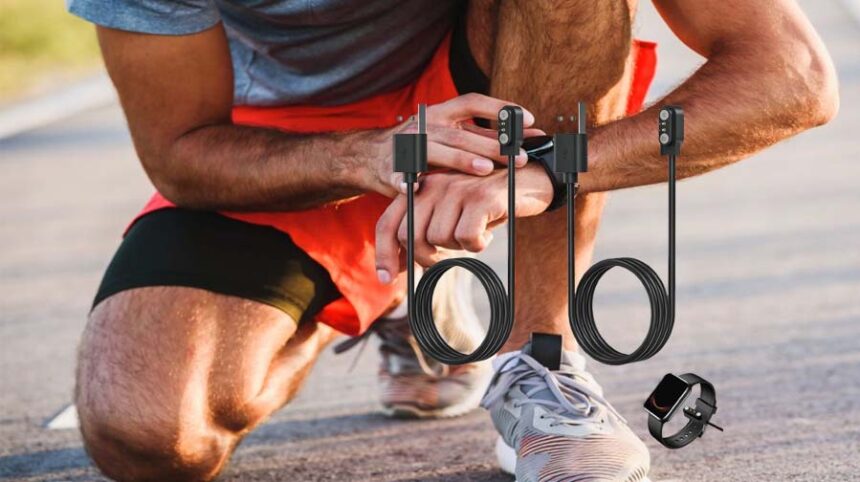
Modern smartwatch users frequently express frustration regarding the lack of a universal USB-C port, a feature now standard on nearly every smartphone. However, the reality of wearable technology involves an incredibly fragile balance between material engineering and compact design. Engineers are tasked with packing processors, biometric sensors, Bluetooth antennas, and batteries into incredibly small spaces. Every single millimeter is essential for device performance and battery life, meaning a physical, standardized port would require structural sacrifices that are currently unsustainable for these manufacturers. The exclusion of these ports is a calculated design choice rather than an oversight.
The Non-Negotiable Necessity of Waterproofing
Unlike office-bound electronics, smartwatches are designed to survive rain, sweat, and submersion in pools. The structural integrity of the device relies heavily on its ability to resist both water and dust infiltration over time. Every opening in the exterior casing creates a potential point of vulnerability that could lead to component failure. Industry experts largely agree that magnetic or inductive charging systems represent the safest available path. These systems allow the watch body to remain completely sealed, effectively eliminating the gaps or fissures that would otherwise be susceptible to wear and tear. For the hardware designer, ensuring longevity and protecting delicate internal parts takes absolute priority over the convenience of a standardized cable.
Miniaturization at the Edge of Physics
Designing a smartwatch involves pushing the limits of physical possibility within a 40 to 45-millimeter casing. Including a standard port would occupy internal mounting space that would otherwise be used for battery capacity, effectively reducing the device’s operational life. Manufacturers instead opt for magnetic solutions that require no pass-through holes in the frame. This design approach ensures that the device can be safely submerged without fearing immediate oxidation of internal circuits. While this forces the user to depend on a specific, bundled accessory, high-end developers view this as the only viable route. Market demand for resistance against the elements remains a non-negotiable requirement.
Custom Geometry and Proprietary Engineering
The fragmentation of charging standards is largely driven by the distinct morphology of current smartwatches. Each manufacturer creates models with unique thicknesses, curvatures, and complex internal architectures. Charging systems must be perfectly adapted to the specific design of the individual case. Consequently, charging pins are placed with sub-millimeter precision to ensure the highest possible energy efficiency during the transfer process. The charger acts not merely as a power tool, but as a technical extension of the device itself. This design philosophy is driven by the necessity of the varied forms that modern wearables have taken, rather than a simple desire to sell more proprietary cables.
Thermal Management and System Longevity
External aesthetics dictate internal hardware layout, forcing manufacturers to optimize the placement of wireless coils to minimize thermal dispersion. Heat generation during the charging process is a major threat to miniaturized electronic components. If chargers were universal, heat management would become significantly less efficient, potentially damaging the internal battery. By utilizing proprietary systems, manufacturers ensure an optimal lifecycle for their devices. Customizing the charging infrastructure allows for superior performance under prolonged stress. It remains a technological paradox where a “closed” system actually fosters greater operational longevity for the consumer.
The Conflict Between Regulation and Innovation
European institutions are actively pushing for common standards to mitigate global electronic waste, but imposing USB-C on smartwatches could inadvertently stifle design evolution. Jitesh Ubrani, an expert at the International Data Corporation, has openly questioned the wisdom of forcing this change. The primary fear is that aesthetic simplification might come at the cost of future technical progress. Wireless charging still struggles with issues regarding positioning precision and speed, often leading to devices failing to charge overnight if misaligned. The industry currently lacks a mature standard that can reconcile the necessary ultra-compact dimensions with high-speed power transfer.
Environmental Impact and Future Horizons
Regulations regarding electronic waste must also account for the life cycle of cables and energy efficiency. Forcing manufacturers to implement non-optimized standards could lead to higher overall energy waste, as heat dispersion during inefficient charging is a frequently underestimated factor. A USB-C port on an extremely small device might actually consume more current than would be needed through optimized induction. Analysts suggest that convergence toward a single standard will only occur when the supporting technology reaches full technical maturity. Until the form factors of these devices remain so heterogeneous, true uniformity will likely remain a chimera for the foreseeable future.