

The tale of Rapa Nui represents one of history’s most persistent enigmas. For generations, scholars insisted that deforestation and agricultural collapse devastated the islanders. They painted a picture of societal suicide, blaming the builders of the iconic stone statues, or moai, for their own demise. Recent satellite analysis and artificial intelligence now shift this consensus. These tools suggest that the actual agricultural capacity was far smaller than researchers previously imagined, effectively debunking the tragic theory of an ancient ecocidial collapse on the island.
Uncovering the Agricultural Reality
Polynesian explorers reached this remote volcanic landmass approximately one millennium ago. These early settlers encountered immediate challenges, including limited freshwater sources and difficult terrain for farming. To overcome these harsh conditions, the inhabitants developed an ingenious method involving stone mulching. They placed rock fragments across their fields to manage soil temperature and moisture levels effectively. This technique allowed them to cultivate tubers despite the challenging environment. Recent studies demonstrate that they utilized significantly less land for farming than previous academic models assumed. By cross-referencing satellite imagery with advanced data processing, scientists revealed that only a small fraction of the island supported intensive agricultural output. This discovery challenges the old narrative that thousands of people relied on vast, unsustainable farmland areas.
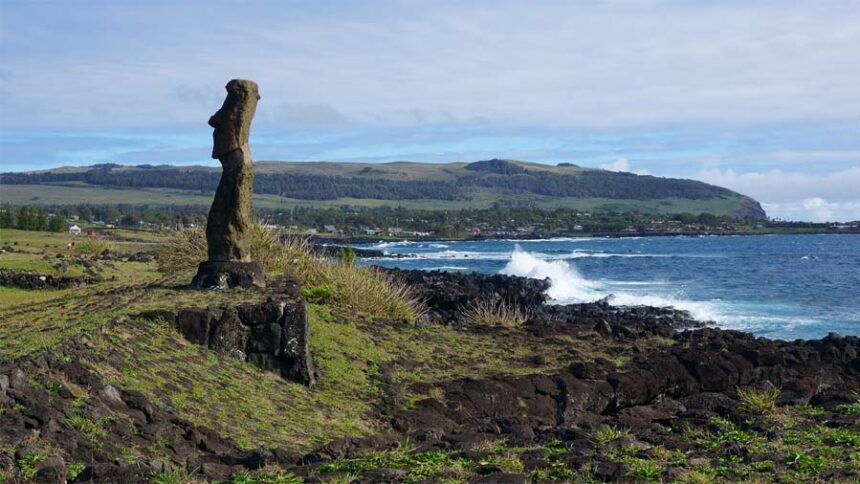
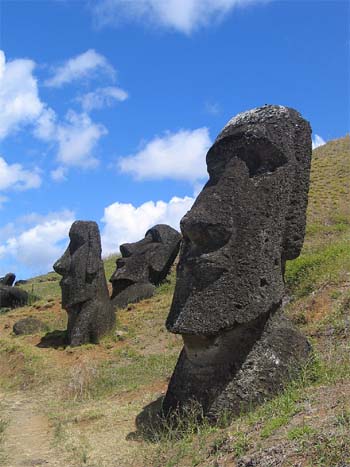
The volcanic landscape of Rapa Nui required constant attention and innovation from its residents. These people understood the specific needs of their crops perfectly. They transformed rocky, seemingly barren surfaces into productive gardens through sheer determination. Such efforts prove that the islanders managed their resources with great care. They did not simply exhaust the land for the sake of statues or short-term gains. Instead, they built a sophisticated system that maintained fertility over centuries. This evidence suggests a society that prioritized long-term survival over reckless consumption. Their architectural achievements, including the towering moai, showcase their profound connection to the land and their ancestral beliefs. These structures serve as monuments to their resilience rather than markers of their failure.
Challenging the Population Myth
Many historians previously estimated the pre-European population reached numbers as high as twenty-five thousand residents. They based these figures on the assumption that twenty percent of the island possessed high agricultural viability. The new study suggests these calculations included many rocky areas unsuitable for crop growth. Consequently, the researchers conclude the island never sustained such massive numbers. Dylan Davis, a prominent researcher in the field, explained during a recent interview that the island could only support a limited number of inhabitants. He argued that the population size witnessed by Europeans actually represented the peak of their society. They existed in harmony with their environment rather than living as the remnants of a fallen, starving civilization.
This revision changes our fundamental understanding of pre-contact Rapa Nui. It removes the burden of guilt from the ancient islanders for their supposed destruction of the island’s ecosystem. If the population never reached those extreme numbers, it follows that the environmental pressures were far less severe than previously assumed. This shifts the focus from a tragic, self-inflicted collapse to a story of successful adaptation. These people navigated the constraints of their island home with precision and wisdom. Their history deserves to be remembered for its ingenuity rather than as a cautionary tale of environmental suicide.
The True Impact of External Factors
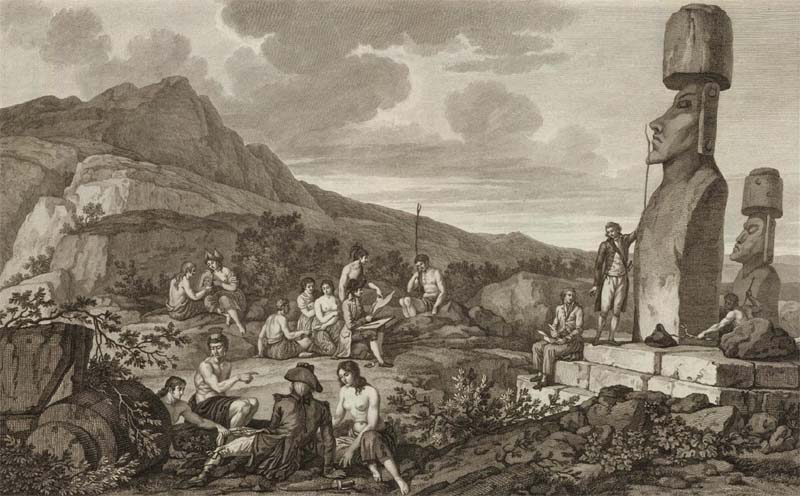
The narrative of self-destruction frequently overlooks the devastating impact of outside contact. European explorers arrived in the eighteenth century and found a population of roughly three thousand people. Shortly after this initial contact, the islanders suffered catastrophic declines due to imported diseases. These illnesses wiped out vast numbers of individuals who lacked natural immunity to foreign pathogens. During the nineteenth century, external forces further decimated the indigenous population through forced deportations for slavery and mass migrations to other regions. By the end of that century, only a small group of original Polynesian descendants remained. These external factors provide a much more accurate explanation for the population collapse than the theory of internal resource depletion.
The arrival of foreign ships marked a turning point that brought misery and displacement. Traders and colonizers prioritized their own economic gain over the lives and culture of the local people. They stripped the island of its vibrant history and forced the survivors into new, hostile realities. This dark period of history remains a critical piece of the Rapa Nui puzzle. It highlights how colonial expansion often destroyed thriving communities in the name of progress. The true decline of the population clearly links to these external, violent forces rather than an internal, environmental catastrophe.
Redefining Rapa Nui’s History
Rapa Nui eventually became part of Chile in 1888, marking the beginning of a long journey toward recognition. The islanders finally secured Chilean citizenship and better economic support during the mid-twentieth century. Today, the territory operates with specific autonomies and hosts a population of nearly eight thousand residents. This history remains a powerful example of how scientific paradigms evolve with better data and technology. The myth of the ecocidial collapse served as a cautionary tale for decades, yet reality appears far more nuanced. By stripping away colonial-era biases, researchers now appreciate the resilience and sustainability of the original Rapa Nui society. This new understanding honors their legacy far better than the persistent stories of their supposed failure. The debate continues among global experts regarding these revised population estimates. Some scholars argue the researchers still undervalue the ingenuity of ancient agricultural techniques. They believe these methods allowed for higher yields than satellite data might suggest. Furthermore, mapping historical field usage remains an inexact science, as time erases many physical traces of early cultivation. Nevertheless, this study provides a crucial shift in perspective. It encourages a more objective look at how ancient civilizations managed their resources in isolation. By moving away from sensationalist narratives, science reconstructs a clearer, more respectful image of the Rapa Nui people and their extraordinary ability to thrive in such a remote location. Their enduring spirit continues to capture our collective imagination, inviting us to learn from their past success.