


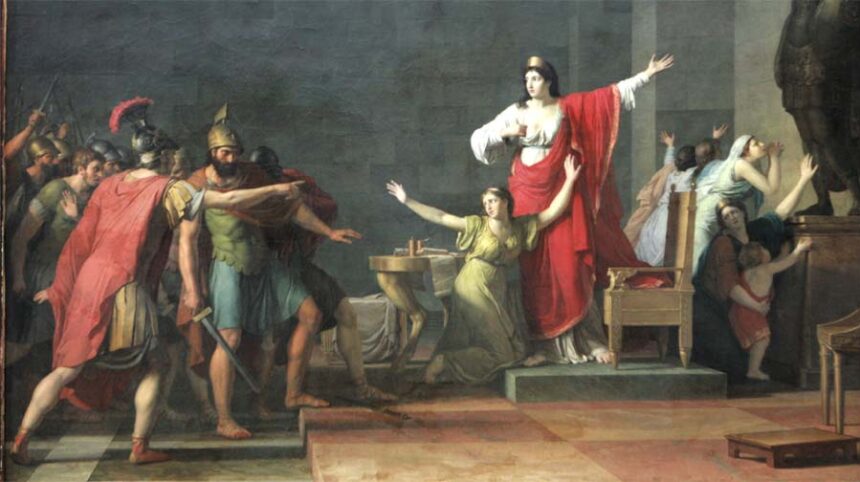
The history of the Macedonian throne remains stained by the shadow of a woman who defied every societal constraint of the fourth century BC. Olympias, born Myrtile in Epirus, transformed from a tribal princess into a formidable architect of political dominance. She commanded fear within the Macedonian court through occult rituals and lethal strategic maneuvers. Behind the rise of her son, Alexander the Great, stood a mother whose obsession with divine lineage fueled his conquest. She viewed every royal alliance as a battlefield for total control. While historians often focus on her son’s battlefield triumphs, this investigation uncovers the bloody mechanisms of the palace. Her path led to the collapse of the Argead dynasty, proving that power acquired through fear rarely grants a peaceful end.
The Mystical Origin and the Serpent Cult
Ancient accounts paint a vivid picture of a woman deeply immersed in enigmatic traditions. Olympias claimed descent from the legendary hero Achilles, establishing a self-proclaimed mandate for greatness. Her religious devotion centered on the wild, ecstatic cults of Dionysus. Witnesses reported clandestine ceremonies on the island of Thasos where the queen danced amidst living serpents. These practices unnerved the traditionalist Macedonian nobility. Rumors suggested that the god Zeus himself fathered Alexander during these forbidden rituals. Philip II, the Macedonian king, viewed these displays with intense suspicion. He constantly clashed with his wife over her commitment to these pagan mysteries. Despite the friction, the queen maintained a reputation of semi-divine status. This aura of holiness served her well when she birthed the future world conqueror.
A Marriage Defined by Violent Discord
The union between Philip and Olympias functioned more like an open war than a royal partnership. Rationality guided the king’s political decisions, but the queen reacted with raw, vengeful passion. She demanded the status of a co-ruler, viewing her role as essential to the state’s foundation. Constant infidelities by Philip fueled her deep-seated jealousy and hatred. The situation reached a breaking point when the monarch married the young noblewoman Eurydice. Alexander publicly sided with his mother during the resulting family fracture. Both mother and son fled into exile within Epirus, sparking massive diplomatic turmoil. The king’s subsequent assassination left the court in chaos, with many fingers pointing directly at the queen. Regardless of her physical involvement, she effectively consolidated power as the sole advisor to the young Alexander.
The Puppet Master of the Macedonian Court
During Alexander’s eastern military campaigns, the queen remained in the Macedonian heartland. She closely monitored every political movement from the comfort of the royal palace. While the king sent her lavish gifts, he intentionally blocked her from formal administrative authority. He placed the general Antipater in charge of the government instead. Olympias perceived this exclusion as a grave, unforgivable insult. She secretly operated a complex network of spies and informants to undermine the official regent. Her letters to Alexander contained relentless complaints about the state of affairs. Reports suggest that the king once remarked to his officers that his mother’s tears held more weight than entire diplomatic dossiers. She refused to accept a passive role, even while separated from the front lines by vast distances.
The Vengeful Descent into Chaos
After the unexpected death of her son in 323 BC, the queen plunged into the post-Alexandrine power vacuum. She navigated the conflicting interests of various generals with calculated aggression. Her ability to identify vulnerabilities allowed her to manipulate several claimants to the throne. However, this strategy quickly invited hatred from the veteran military leadership. She eventually ordered the cold-blooded execution of her rival, Philip Arrhidaeus, and his wife, Eurydice. This act of violence backfired spectacularly against her personal ambitions. The Macedonian army, once loyal to the mother of a god, now viewed her as a common executioner. Popular support evaporated, replaced by deep-seated terror and moral disgust. She had successfully isolated herself from the only power base capable of ensuring her survival.
The Final Siege and Tragic Conclusion
Trapped within the fortress of Pella, the former queen awaited the inevitable siege by Cassander. Her enemies feared her formidable intellect and sharp tongue. Cassander denied her a formal trial, convinced that her oratory would sway the judges toward acquittal. When the soldiers finally received the order to execute her, they hesitated due to her regal aura. She commanded respect even in her final moments of captivity. Ultimately, the relatives of those she had previously purged performed the act of strangulation. This brutal event effectively ended the direct bloodline of the great conqueror. The total erasure of the young Alexander IV followed shortly thereafter. A curtain fell on an era defined by both unparalleled glory and horrific insanity.
Analyzing the Misogynistic Political Landscape
Historians cannot fully evaluate this queen without considering the extreme patriarchy of the classical era. The Macedonian elite viewed her political interference as an unnatural disturbance of the order. She defended her status against an environment that actively sought her silence. Every act of cruelty served as a desperate shield for her biological and political survival. Her failed attempts to secure the future through marriage alliances reflect a sophisticated understanding of geopolitics. She tried to preserve her son’s crumbling empire through the strategic union of her daughter, Cleopatra. The divergent interests of the ambitious generals doomed every one of these diplomatic efforts. Her tragedy lies in a life that birthed a legend, only to see that same legend’s world destroy her.